
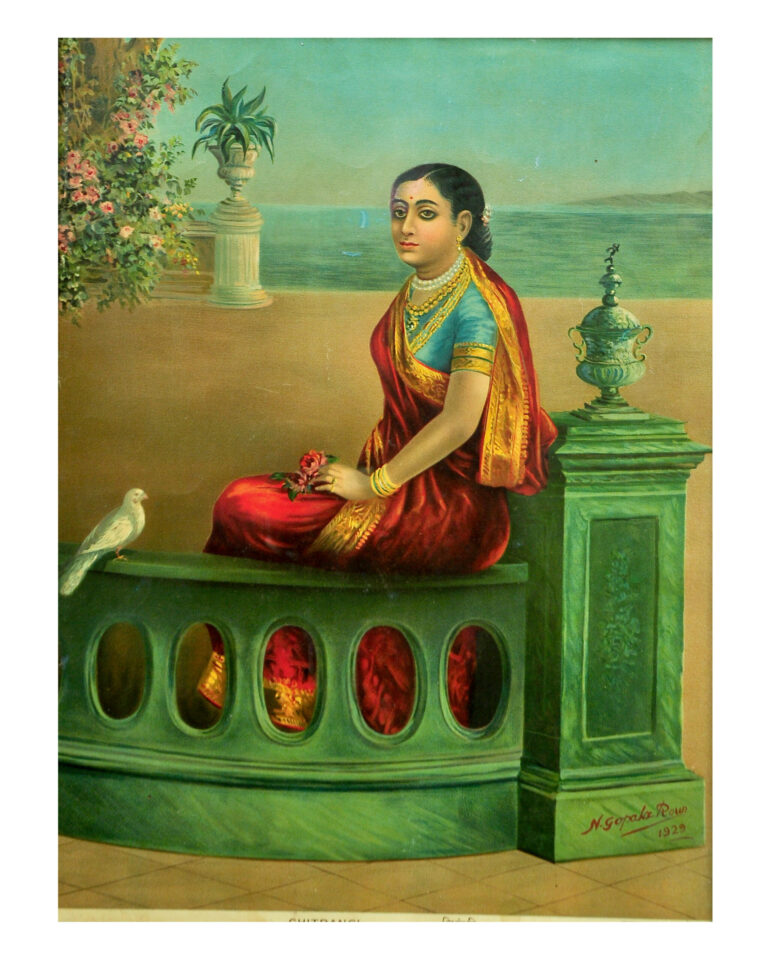
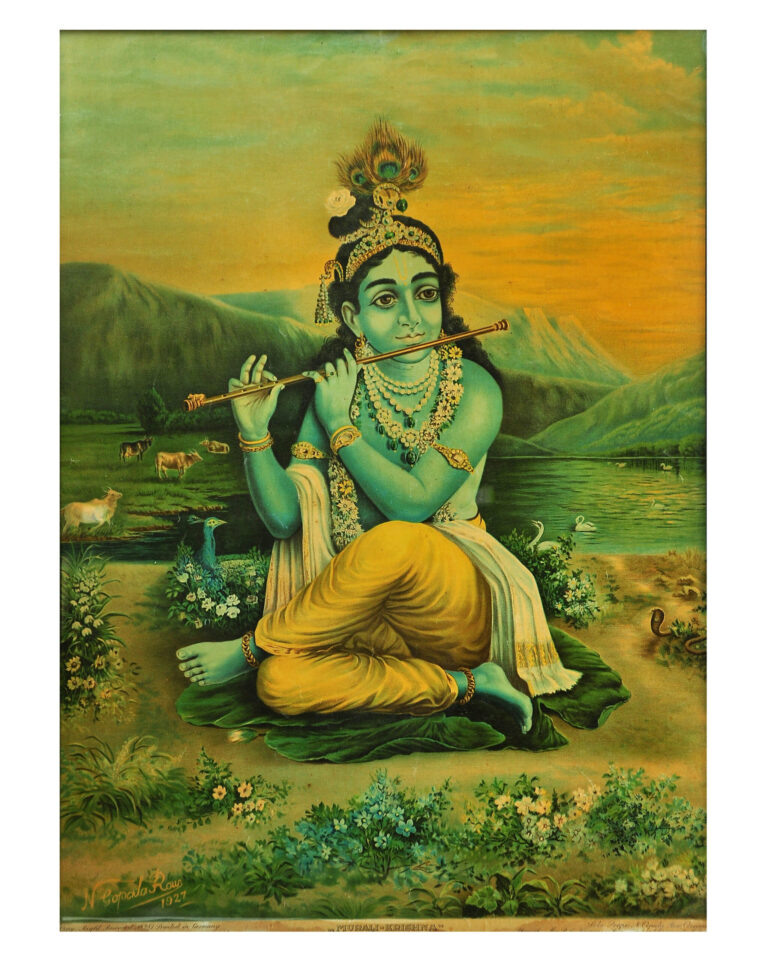
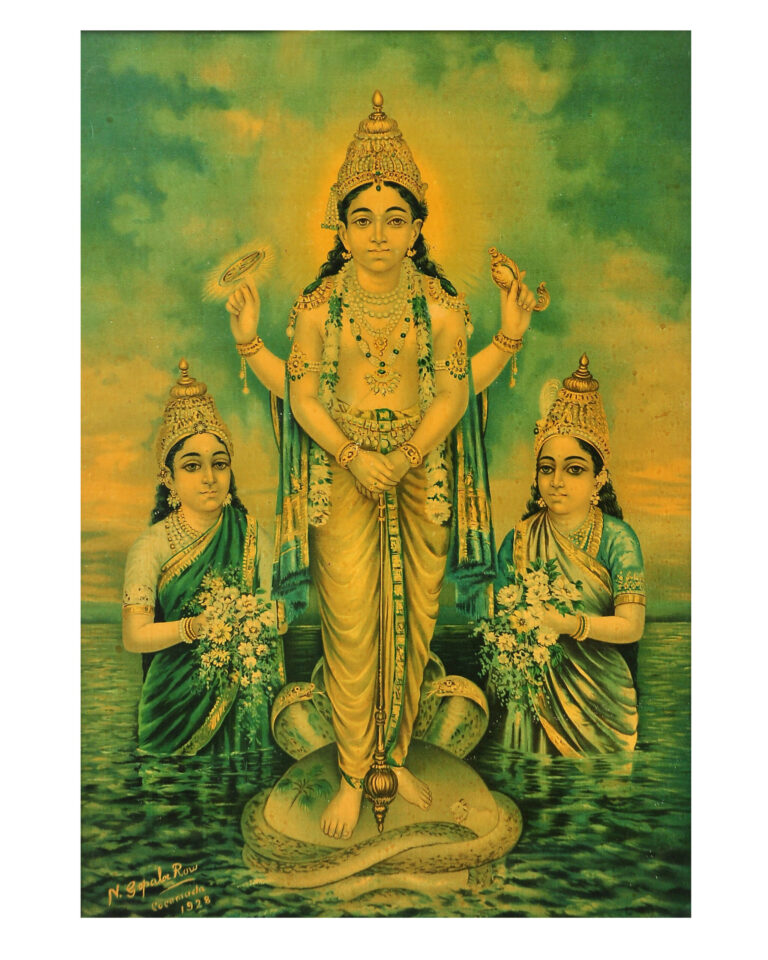
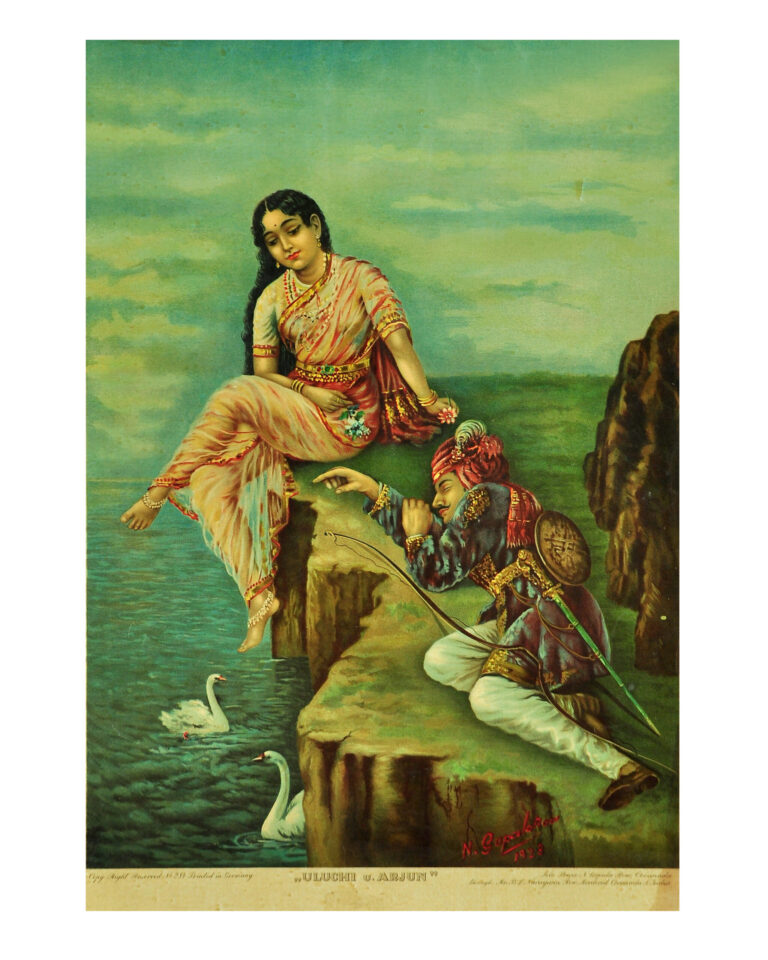
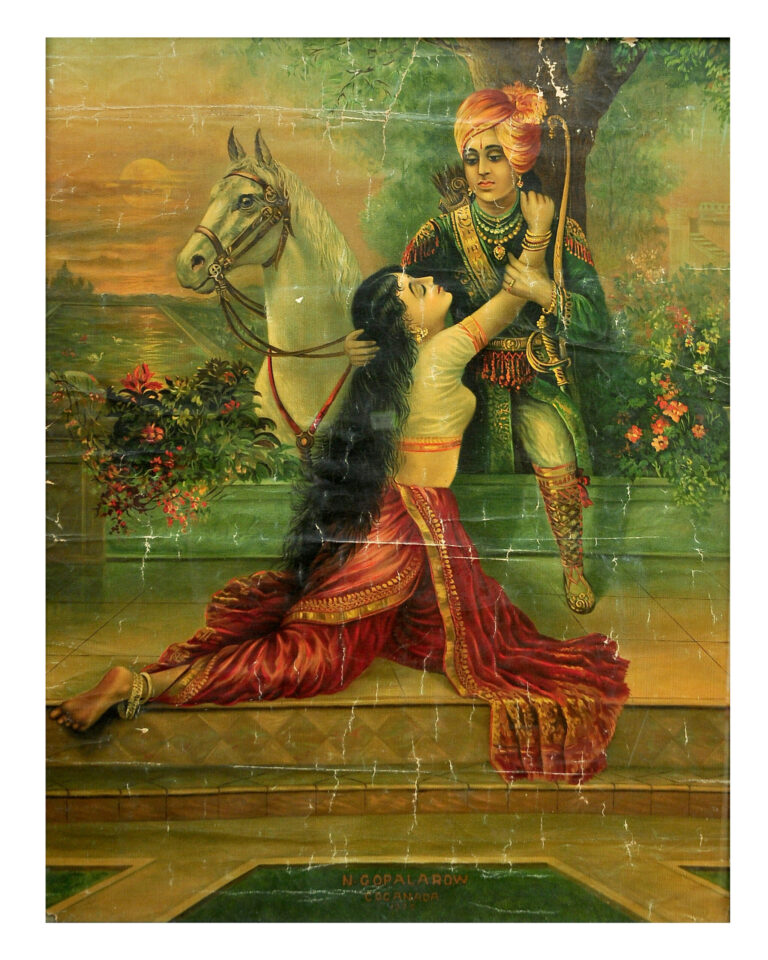
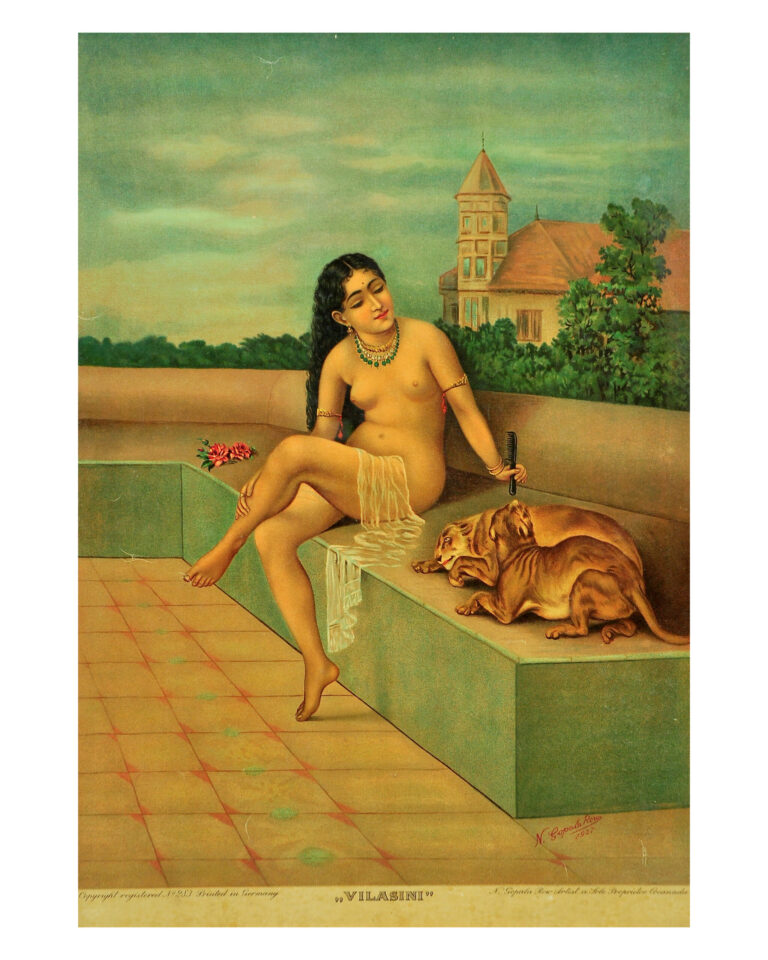
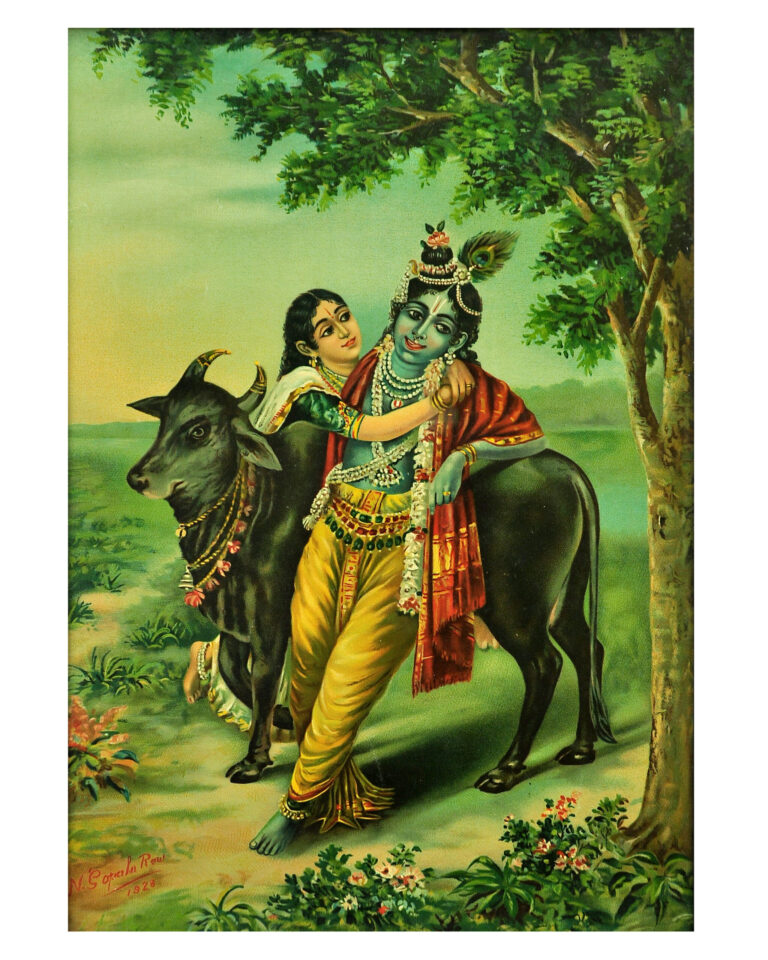
N Gopal Row paintings as German Oleographs
German oleographs refer to a specific type of print produced using the oleographic printing technique, particularly in Germany. This method gained popularity in the 19th century and is characterized by its ability to replicate the look and feel of oil paintings.
German oleographs were created using a lithographic process, where images were printed from a flat surface. The use of oil-based inks allowed for vibrant colors and textures that mimicked traditional oil paintings.
Many German oleographs depicted scenes from history, mythology, landscapes, and portraits. They often featured detailed and ornate designs, catering to both artistic and commercial markets.
The oleographic process made art more accessible to the general public, as these prints were more affordable than original oil paintings. This contributed to the popularization of art in homes and public spaces.
German oleographs played a significant role in the dissemination of visual culture during the 19th century, influencing decorative arts, advertising, and illustration.
Today, original German oleographs are considered collectible items and are valued for their artistic quality and historical significance.
Overall, German oleographs are an important part of the history of printmaking and reflect the artistic trends of their time.
N. Gopala Row: A Self-Taught Master of Indian Art
N. Gopal Row, a renowned Indian artist of early 20th century known for his contributions to traditional Indian art forms, particularly in the depiction of mythological and religious themes. His style often blends traditional techniques with contemporary elements, making his works distinctive.